
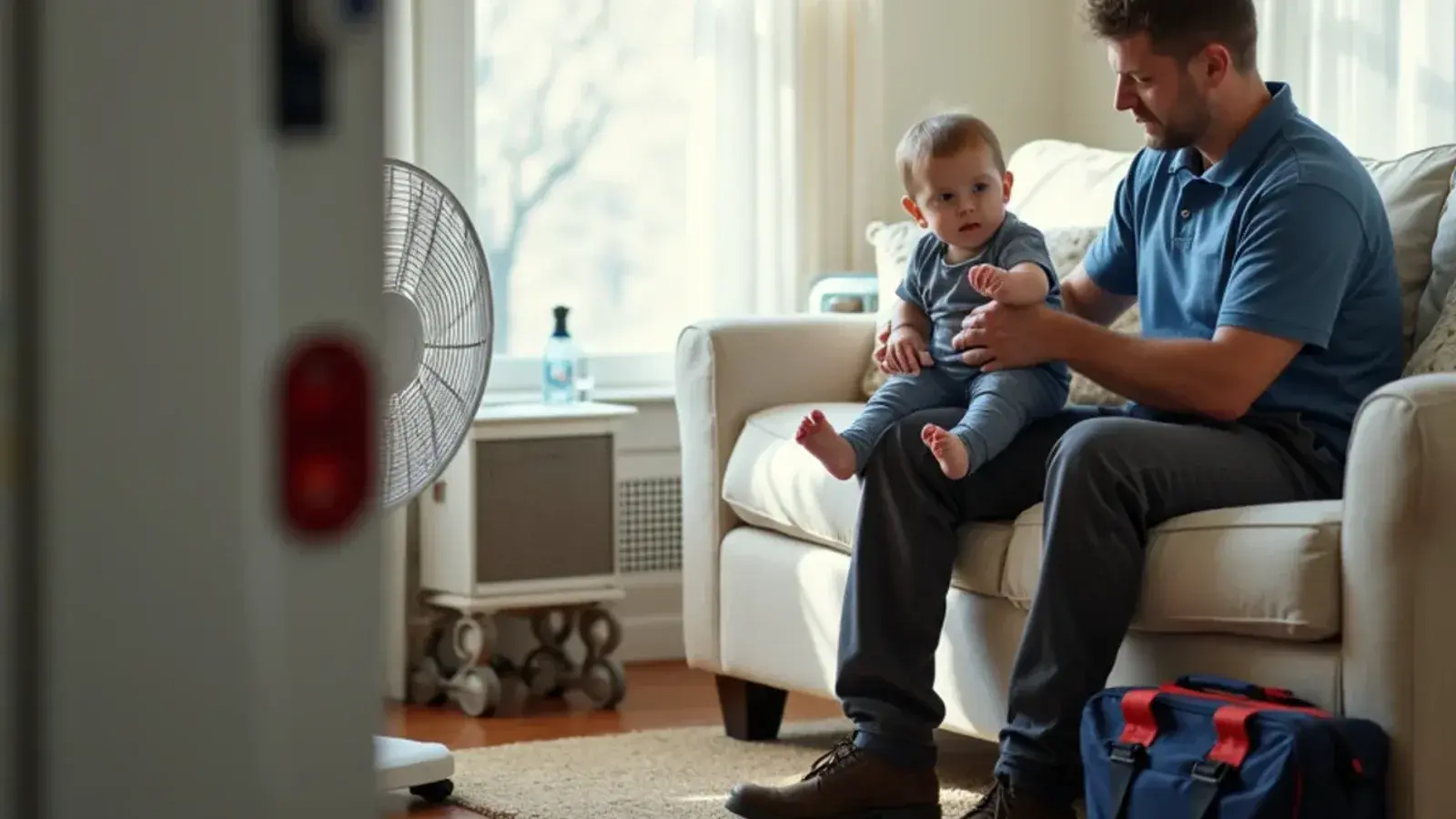
If your AC goes out in a heat wave, protect people before the equipment: move infants, older adults and anyone ill to an air-conditioned place or the coolest room, give fluids and cool cloths, and call 911 for confusion or fainting. Then check thermostat, breaker and filter, and call for emergency AC repair.
AC out during a heat wave is more than an inconvenience when someone in the house is vulnerable. Infants, young children, adults over 65, pregnant women and people with heart, lung or kidney conditions lose the ability to shed heat faster than healthy adults. Some medications make it harder too. In the Midlands, where summer highs sit in the 90s with heavy humidity, an indoor temperature can climb quickly once cooling stops.
This guide puts people first and equipment second. Get the at-risk person cool, know the warning signs, and then deal with the repair.
Move the most vulnerable person first
Your first decision isn't about the AC. It's about whether the person at risk should stay in the house.
- If you can reach an air-conditioned place, such as a relative's home, a library or a shopping center, go there now with infants, older adults or anyone who's unwell.
- If you're staying put, choose the coolest room: usually ground floor, on the shaded side, with the fewest windows.
- Check local news or county emergency management for cooling centers during declared heat events.
- Never leave anyone, including pets, in a parked car to "cool off." Car interiors heat dangerously fast once the engine is off.
Know the difference between heat exhaustion and heat stroke
Heat illness progresses. Catching it early is everything.
| Condition | Signs to watch for | What to do |
|---|---|---|
| Heat exhaustion | Heavy sweating, cold, pale, clammy skin, fast weak pulse, nausea or vomiting, muscle cramps, tiredness, dizziness, headache, fainting | Move to a cooler place, loosen clothing, apply cool wet cloths, sip water; get medical help if vomiting, worsening, or lasting more than an hour |
| Heat stroke | Body temperature of 103°F or higher, hot, red, dry or damp skin, fast strong pulse, headache, dizziness, nausea, confusion, losing consciousness | Call 911 right away, move to a cooler place, cool with wet cloths or a cool bath, do not give fluids |
These signs follow CDC guidance on heat-related illness. Heat stroke is a medical emergency. If you see confusion, a very high temperature or unconsciousness, call 911 before anything else, including the HVAC company.
Cooling infants and young children
Babies can't tell you they're overheating, so watch for fussiness, flushed skin, fewer wet diapers or unusual sleepiness.
- Dress them in a single light layer.
- Give lukewarm baths and use damp washcloths on the skin.
- Keep feeding on schedule. Ask your pediatrician about fluids, and don't give young infants water unless the doctor says to.
- Keep cribs away from sunny windows and out of upstairs rooms if downstairs is cooler.
Protecting older adults
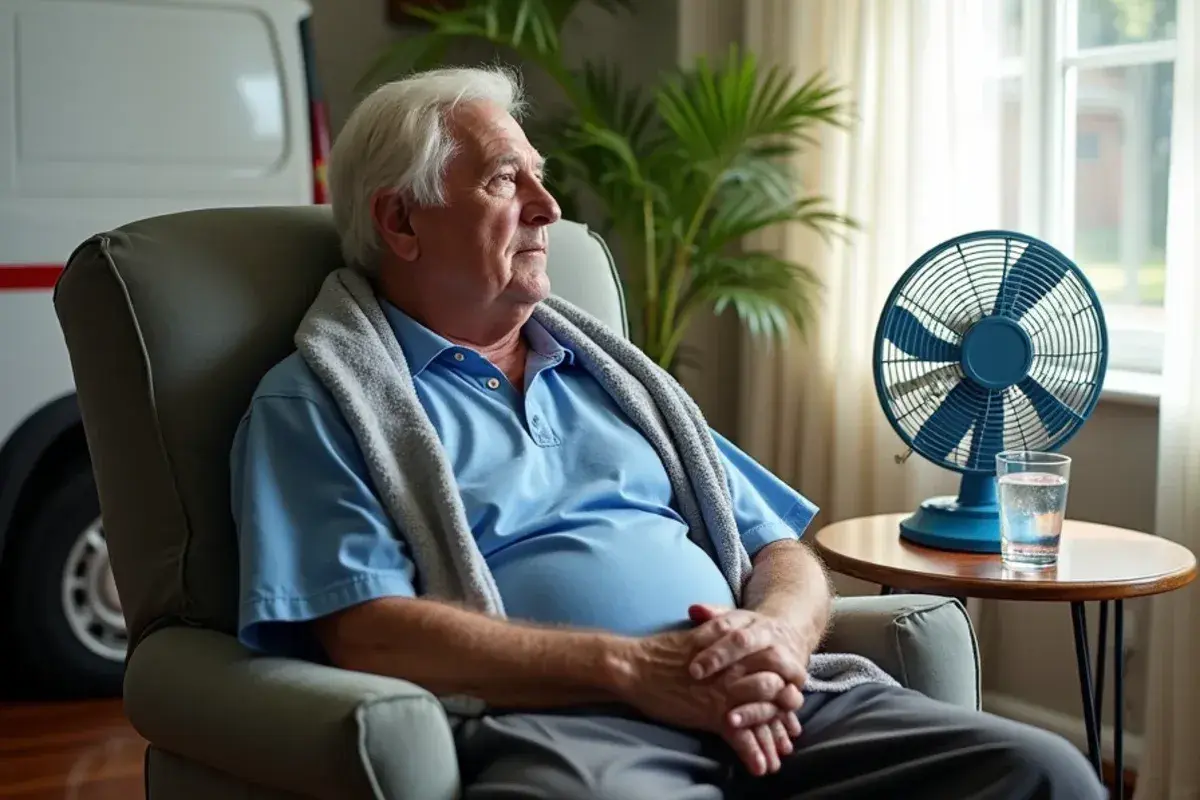
Older adults often don't feel thirst or heat the way younger people do, and some medications interfere with sweating or fluid balance.
- Check on them every hour or two, more often if they live alone.
- Offer water regularly, even if they don't ask.
- Cool showers, foot baths and damp towels across the neck and shoulders help.
- Ask their doctor or pharmacist whether any medications raise heat risk.
Slowing the heat in the house
You won't keep a house cool without the AC, but you can slow the climb.
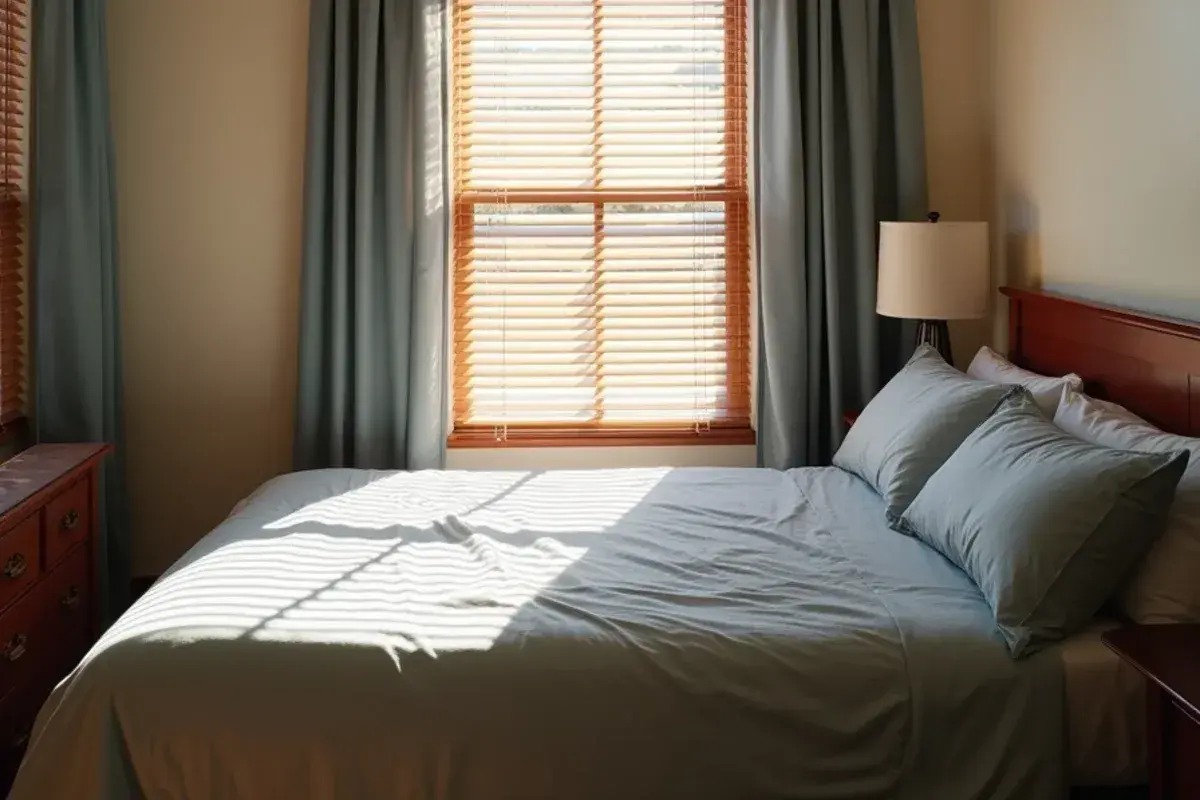
- Close blinds and curtains on every sunny window, especially west-facing ones in the afternoon.
- Keep exterior doors shut and avoid the oven, stove, dishwasher heat-dry and clothes dryer.
- Run ceiling fans counterclockwise to push air down onto people.
- After sunset, if it's cooler outside, open windows on opposite sides of the house and put a box fan in one blowing out.
- Turn off unneeded lights and electronics, which add heat.
Getting the system looked at quickly
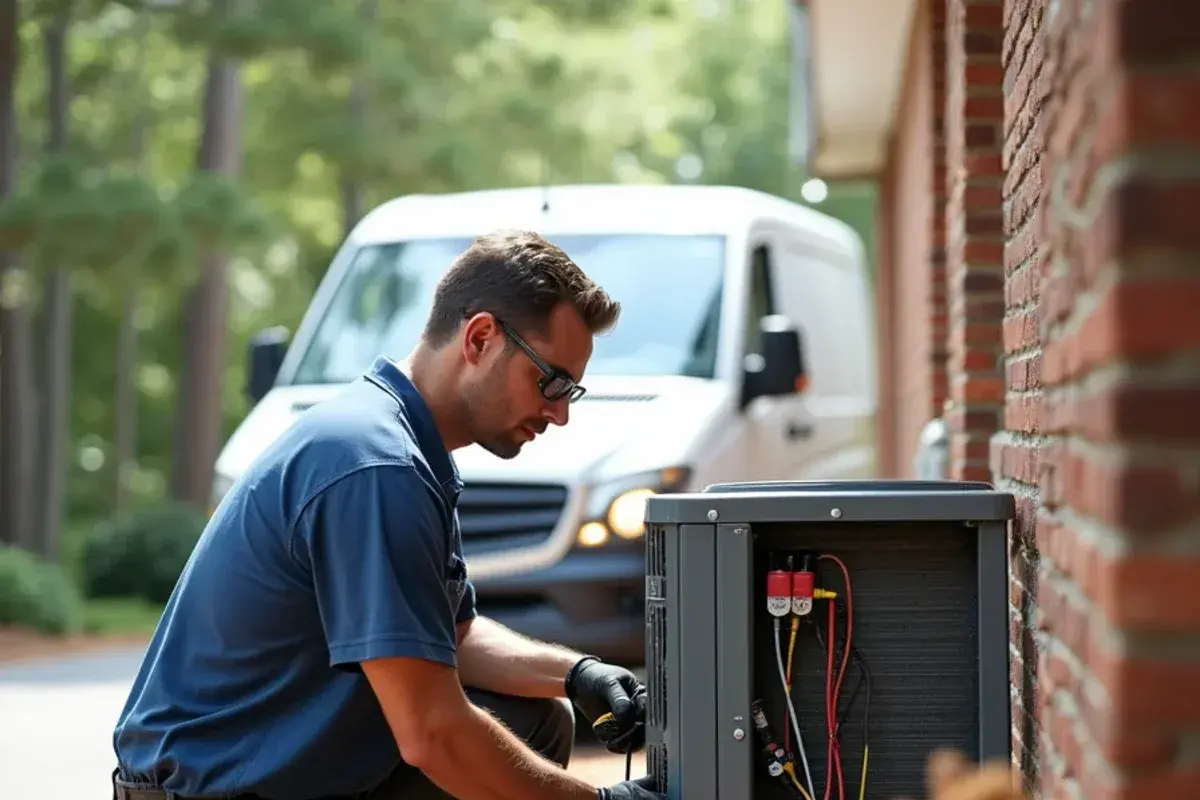
Before calling, do a quick check: thermostat on Cool, breakers not tripped, filter not clogged. If those are fine, the problem is past homeowner territory. Note what the outdoor unit is doing, whether it hums, clicks or sits silent, and how warm the house is now. That information helps the technician come prepared and lets you describe the urgency clearly.
When someone vulnerable is home, call our emergency AC repair line, which answers 24/7, and say who's in the house. We won't promise an arrival time, especially when a heat wave hits every system in the area at once, but we'll give you an honest picture. If everyone's safe somewhere cool and the house can wait, regular AC repair during the day is the better choice, and a same-day slot is often open.
Bridging the gap between the breakdown and the fix
When the whole area is running hard, the honest answer to "how soon can it be fixed?" depends on what failed. That's why the first visit is about sorting the problem into one of three groups.
- Fixed on the spot. A failed capacitor, a burnt contactor, a tripped float switch or a plugged drain. These are the most common heat-wave failures, and they're usually handled the same visit.
- Needs a part. A specific fan motor, control board or coil may have to come from a supplier. Getting partial cooling going, or setting up one cool room, matters more here than a perfect fix today.
- Needs a decision. A failed compressor or a major refrigerant leak on an older system. Replacement equipment can often be found and installed within days, but that is still days, not hours.
The third group is where people feel rushed into a big purchase while the house is hot. You shouldn't have to be. A one-room window unit plus a written repair-or-replace comparison lets you choose with a clear head, and we'd rather you make that call on facts than on the thermometer. If replacement makes sense, you get the options with pros and cons and can decide.
One thing you can safely do while you wait: with the outdoor disconnect switched off, gently rinse grass clippings and pollen off the condenser coil with a garden hose on a soft spray, never a pressure washer, which flattens the fins. Leave the electrical side and the refrigerant lines alone.
Renters and apartments
In the St. Andrews and Harbison corridor, many households rent apartments or townhomes. If that's you, tell the landlord or management office immediately, in writing, and keep a copy. If the person at risk is in danger, don't wait for a reply; move them somewhere cool and call 911 for any heat-stroke symptoms.
In older parts of Columbia, the city that markets itself as "Famously Hot," upstairs rooms in homes built between the 1910s and 1940s can get especially warm without cooling, since many of those houses had ductwork added long after they were built. Across Lexington County, two-story subdivision homes with attic air handlers often see their upstairs bedrooms heat first.
Plan ahead for the next heat wave
Write down the address of an air-conditioned place you can go on short notice. Keep a cooler with ice packs and a few spare washcloths ready. Book a spring cooling tune-up so weak capacitors and clogged coils are caught before the hottest weeks. Put the HVAC phone number and the pediatrician's number in an obvious place. When the AC fails during a heat wave, having those decisions already made frees you to focus on the person who needs you.
If the AC is down right now and someone at home can't handle the heat, get them cool first, then call (213) 423-7827. Tell us who is in the house and what the outdoor unit is doing, and you'll get an honest read on timing and what to do in the meantime.