
If the heat goes out on a freezing night, check four things in order: the thermostat is on Heat, no breaker has tripped, the furnace power switch is on and the filter isn't clogged. If heat isn't back within fifteen minutes, or you smell gas or burning, stop and call a 24/7 technician.
No heat? What to do depends on what kind of system you have, but the first five minutes look the same in every Midlands house: check the thermostat, check the power, check the filter, and decide whether anyone at home needs warmth right away. Our winters rarely stay below freezing for long, so many homes here go years without a real test of the heating system. Then a cold snap drops the overnight low into the 20s and the weak part shows itself.
Work down this list in order. Stop and call for help as soon as something smells, sparks or points to gas.
First five minutes: the checklist for any system
These apply to gas furnaces, heat pumps and electric furnaces alike.
- Thermostat set to Heat, setpoint at least three degrees above room temperature, fan on Auto. Swap in fresh batteries when the display looks faint or empty.
- Breakers. Look for a tripped breaker for the furnace or air handler, and for the outdoor unit on a heat pump. Reset once only.
- Furnace or air handler switch. Most have a light-switch-style power switch on or near the cabinet. It gets bumped off more often than you'd think.
- Filter. A filter packed with dust traps heat inside the furnace until its high-limit safety trips and stops the burners.
- Vents and returns. Make sure furniture or rugs aren't covering them.
If none of that brings heat back within about fifteen minutes, move to the section for your equipment.
Gas or propane furnace: what you can safely check
Many Lexington County homes heat with natural gas where lines run, and rural properties often use propane.
- Smell for gas first. If you notice a rotten-egg smell, do not flip switches or try to relight anything. Get everyone out, then make the call to the gas company or 911 from a spot well away from the building.
- Panel door. The lower blower door presses a safety switch. If it's loose, the furnace won't start.
- Propane level. A tank gauge near empty explains a lot. Your propane supplier needs to refill it and check for leaks before the system restarts.
- Error light. Many furnaces have a small blinking LED visible through a window in the lower panel. Count the blinks; the code chart is usually printed on the inside of the door. Write it down for the technician.
- Condensate line on high-efficiency furnaces. These furnaces make water. If the drain line freezes or clogs, a pressure switch keeps the burners off.
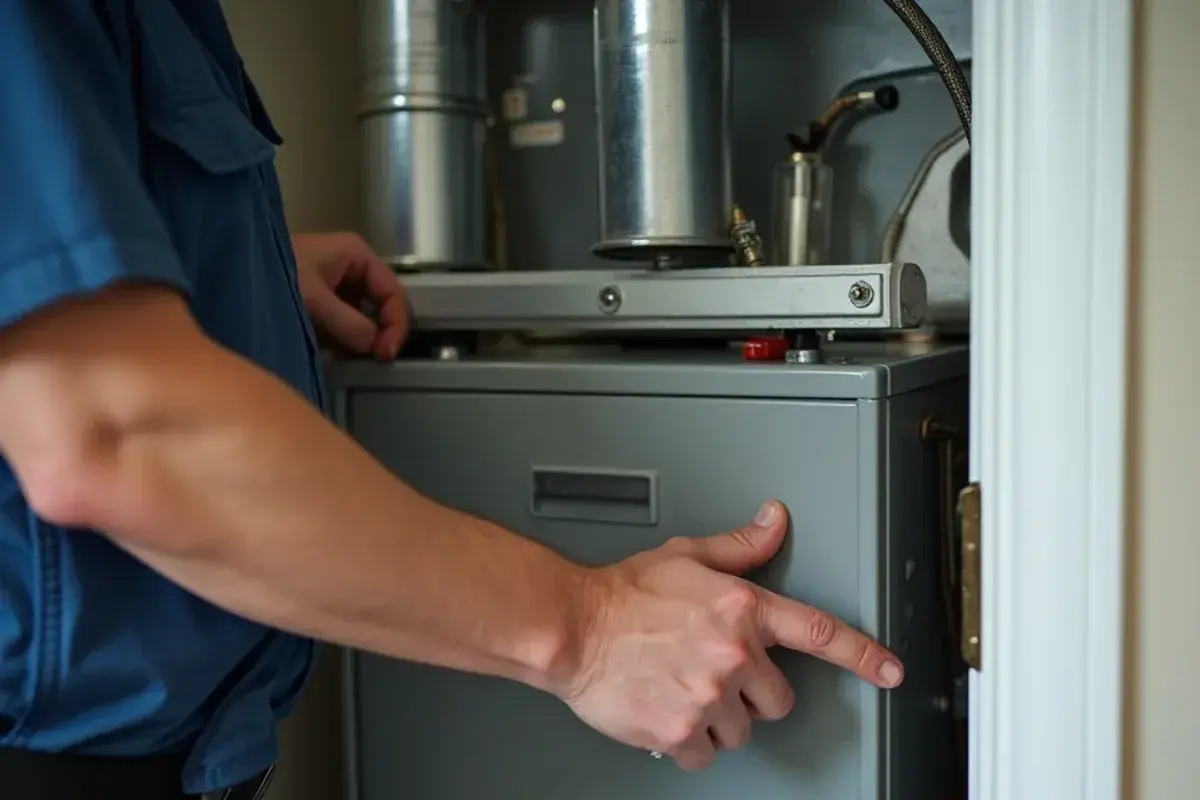
Don't remove the burner cover, bypass a switch, or hold a flame to the burners. Those steps belong to furnace repair, where the technician tests the igniter, flame sensor, pressure switches and gas valve with instruments.
Heat pump homes: frost, defrost and the backup strips
A heat pump pulls heat from outdoor air, even cold air. When temperatures fall into the 20s it works harder and leans on electric heat strips inside the air handler to help.
It's normal to see light frost on the outdoor coil, and to hear the unit go quiet, then whoosh and send up a cloud of steam. That's a defrost cycle. What isn't normal is a coil buried in solid ice, a fan that won't turn, or an outdoor unit that sits silent while the indoor fan blows cool air.
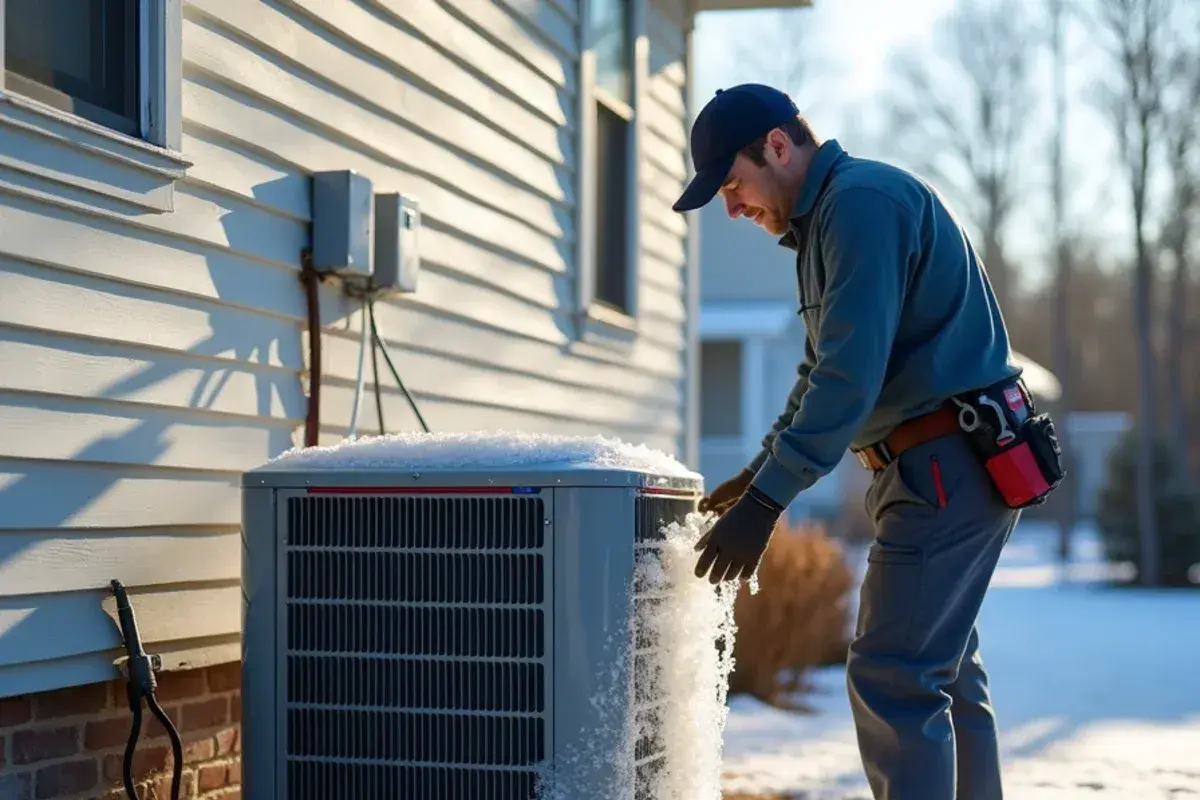
If you see that, set the thermostat to Emergency Heat (sometimes labeled Em Heat or Aux). That shuts off the outdoor unit and runs the strips by themselves. It's an expensive way to heat, but it can carry the house through the night. If emergency heat also fails, the problem may be in the air handler, the strips or their breaker, and that is a job for heat pump repair rather than another thermostat change.
Which problems need help tonight?
| Situation | Risk level | Next step |
|---|---|---|
| Gas or rotten-egg smell | Danger | Get out, then phone the gas company or 911 |
| CO alarm sounding | Danger | Get everyone outside, call 911 |
| No heat, infants, seniors or someone ill at home, low near freezing | High | Call the 24/7 line now |
| No heat, healthy household, house holding above 60°F | Moderate | Bundle up, book first available |
| Heat pump iced but emergency heat works | Lower | Run emergency heat, schedule service |
| Burning or electrical smell from vents | High | Turn system off at the breaker, then call |
For the high-risk rows, our no-heat repair line answers around the clock across Lexington County. We can't promise an arrival time on a night when half the area's systems are struggling, but we'll tell you honestly where you are in line.
Staying warm safely until the repair
Cold-weather emergencies hurt more people through unsafe heating than through the cold itself. Keep it simple.
- Pick one room with the fewest exterior walls, close its door, and gather everyone there.
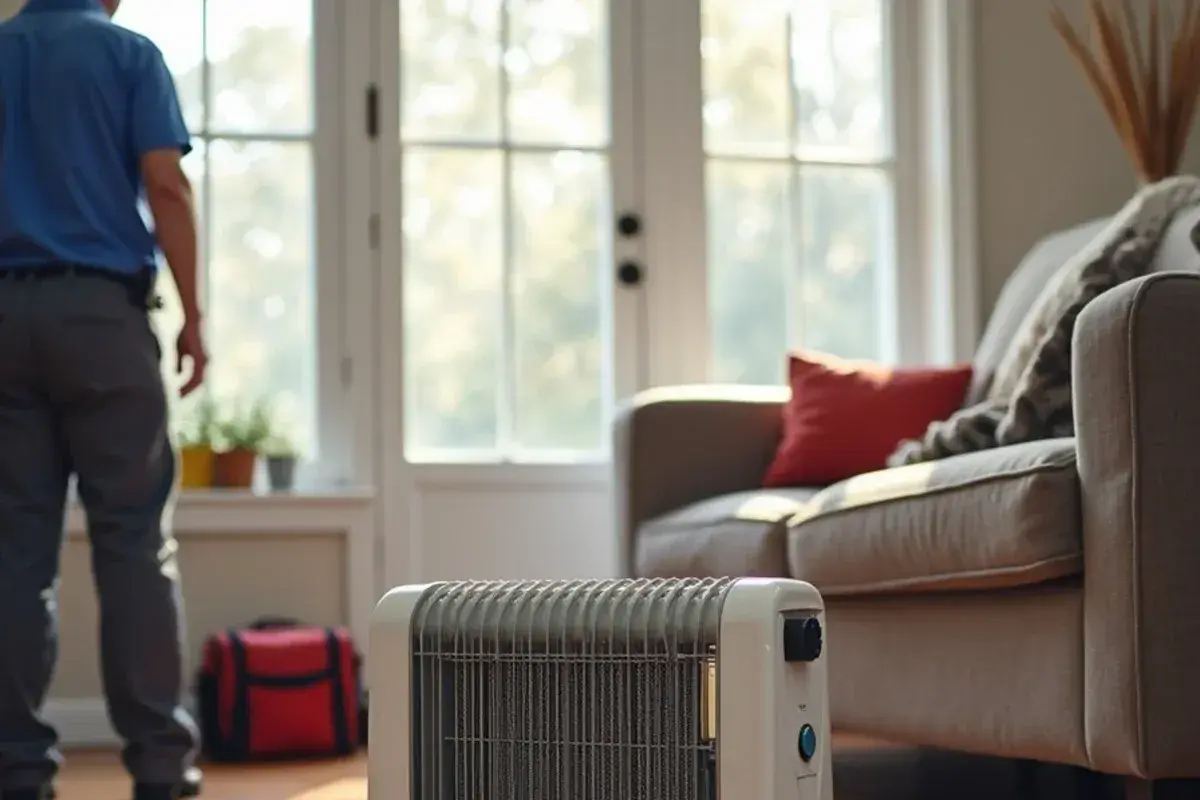
- Space heaters: use units with tip-over shutoff, plug them directly into a wall outlet (not an extension cord or power strip), and keep anything that can burn at least three feet away, the clearance fire-safety groups recommend.
- Never heat the home with a gas oven, grill, camp stove or charcoal.
- Generators belong outdoors. CDC guidance puts them a minimum of 20 feet away from every door, window and vent.
- Pipes: open sink cabinet doors on exterior walls and let a faucet drip, especially in homes on crawlspaces.
- Layers and hats at bedtime, and extra blankets for infants only in ways that follow safe-sleep guidance.
Why the heat fails on the coldest night
A furnace that runs a few hours a day all winter suddenly runs nearly nonstop during a freeze. Igniters that were already cracked, flame sensors coated with residue, and blower motors with worn bearings all give out under that load. Heat pumps fail in their own ways: a stuck defrost board, a reversing valve that won't shift, or heat strips that burned out during the last cold spell and nobody noticed because the weather turned mild.
Older homes see this most. In Irmo, many 1970s to 90s subdivisions still run first- or second-generation heat pumps. In West Columbia, the mill-era and mid-century housing stock tends to combine aging gas furnaces with crawlspace duct runs that lose heat before it reaches the rooms.
Igniters, sensors and heat strips: what we usually find on a freezing-night call
Most no-heat calls during a cold snap come down to a short list of parts, and the diagnosis follows the order the system tries to start. On a gas furnace we watch the sequence: inducer motor, pressure switch, igniter glow, flame, then blower. Wherever it stops is where the meter goes.
- Hot-surface igniter. It glows like a stove element to light the gas. A cracked one may still glow in spots, so it gets a resistance test, not just a look.
- Flame sensor. A thin metal rod that proves the flame is lit. Residue on it makes the furnace light and then shut off. Cleaning often restores it; one that keeps coating up points to a combustion problem worth chasing.
- Pressure switch and drain. On a high-efficiency furnace, a drain or vent pipe that froze or sagged keeps this switch open, and the burners never get permission to fire.
- Heat strips. On a heat pump we measure the amperage on each element. That tells you whether all of the backup heat works or only part of it, which is why some homes feel fine at 40°F and fall behind at 22°F.
The honest trade-off on a cold night is between getting heat back now and fixing the root cause. A new igniter or sensor usually restores heat on the spot. But if the inspection turns up a cracked heat exchanger or a scorched flue, the furnace gets shut off for carbon monoxide safety even though it might still run, and you hear why before any replacement talk starts. Common winter parts such as igniters and sensors are often on hand; a less common control board may mean emergency heat or space heaters until the part arrives.
Before the next cold snap
The cheapest no-heat call is the one that never happens. A fall heating check tests the igniter and flame sensor on a furnace, measures heat strip amperage on a heat pump, and confirms the defrost cycle works. Do it before the first forecast low in the 20s, change the filter, test your carbon monoxide alarms, and know where your breaker panel and gas shutoff are. If the heat goes out anyway, you'll already know which section of this checklist applies to your house.
And if you've worked the list and the rooms keep getting colder, don't wait for daylight when someone at home can't handle the cold. Call (213) 423-7827, tell us whether it's gas, propane or a heat pump and what the thermostat and error light show, and we'll talk you through what is safe while help is arranged.