
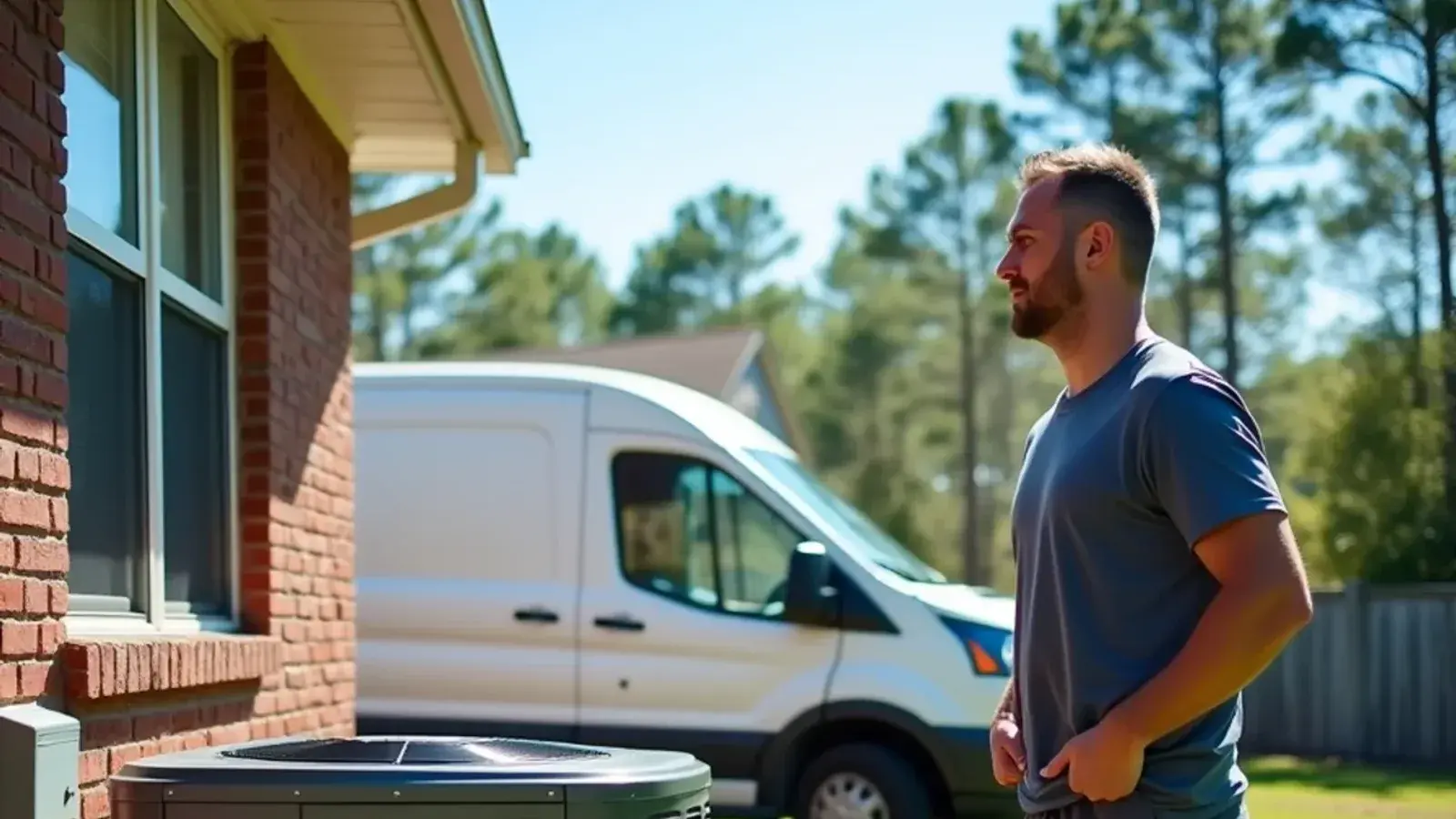
If your AC stopped cooling, do four things first: confirm the thermostat is on Cool, reset a tripped breaker once, swap a clogged filter and check that the outdoor fan is spinning. If none of those fixes it, or you see ice, smell burning or hear humming with no fan, turn the system off and call a technician.
When your AC stopped cooling, what to do first is simpler than it feels in a hot house: confirm the thermostat, check power, look at the filter and glance at the outdoor unit. Those four checks take about ten minutes, need no tools, and solve a fair share of no-cool calls in Lexington. Anything past that involves refrigerant, high-voltage parts or capacitors that can hold a charge, and that work belongs to a technician.
This guide walks through the safe checks in order, explains what the outdoor unit is telling you, and helps you decide whether the problem can wait for a daytime appointment or needs a call tonight.
Run these four checks before you call
Work through them in this order. Each one rules out a cause so the next step makes sense.
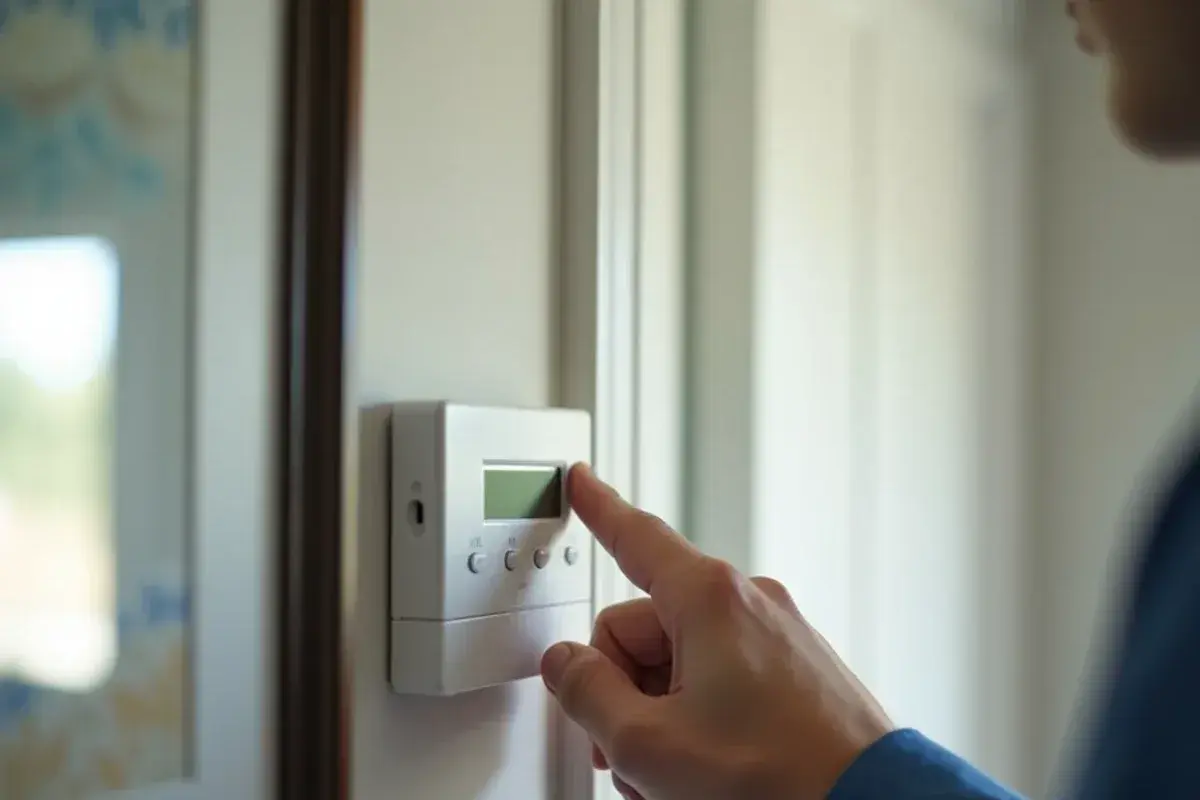
1. Thermostat mode and setpoint
Make sure the thermostat says Cool, not Heat or Off, and that the setpoint is a few degrees below the room temperature. Set the fan to Auto. If the screen is blank, replace the batteries (many models have them even when wired). A thermostat that lost power after a storm sometimes reverts to a default schedule.
2. Breakers and the outdoor disconnect
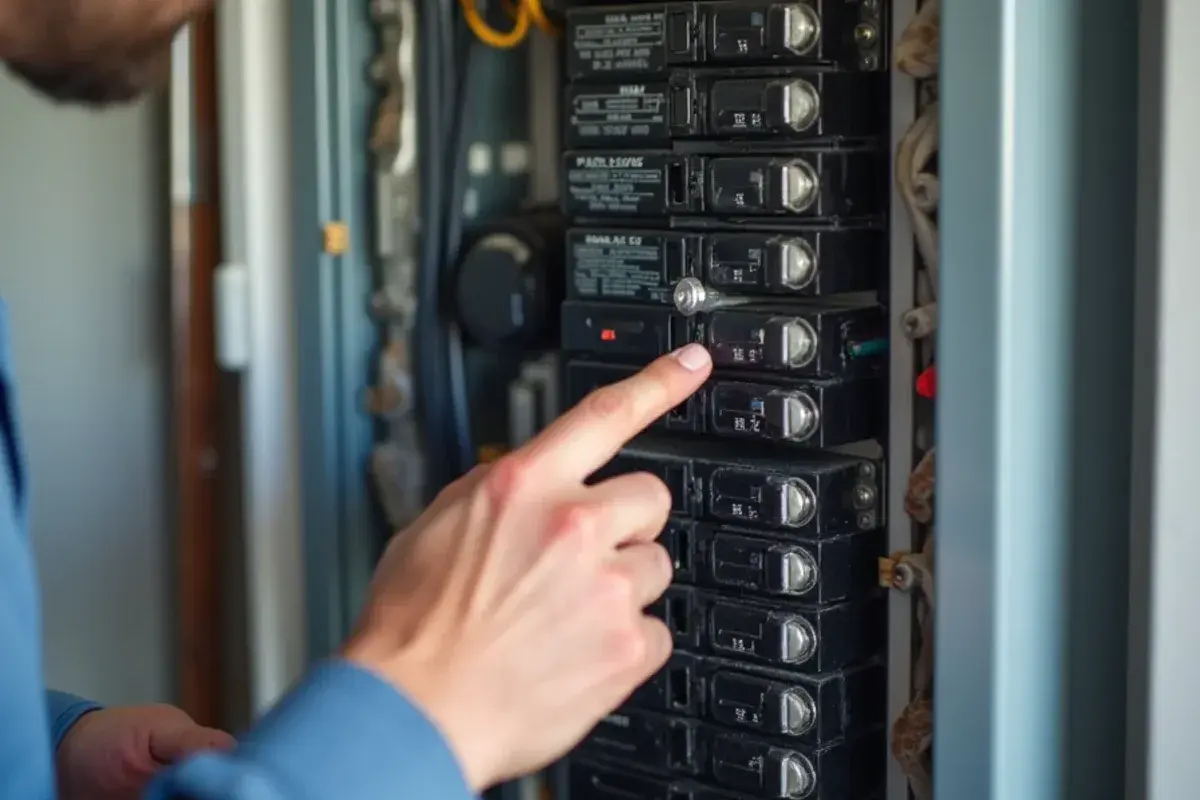
An AC system usually has two breakers in the main panel: a double-pole breaker for the outdoor condenser and a separate one for the indoor air handler or furnace. A tripped breaker rests in the middle. Push it fully off, then back on, one time. Also check the disconnect box mounted on the wall beside the condenser; someone mowing or a pressure-washing crew may have pulled it.
3. The air filter
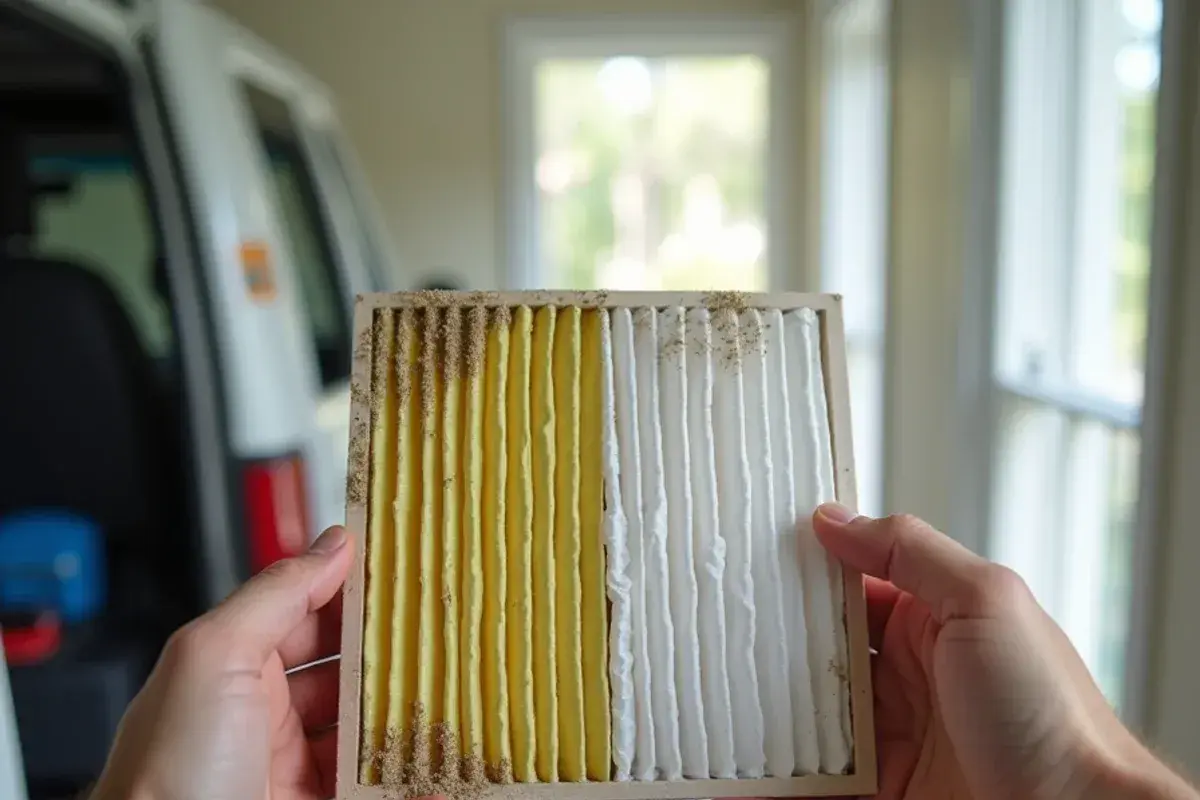
When the filter plugs up, too little air crosses the indoor coil. The coil then gets too cold, frosts over, and the house warms up even though the system runs constantly. In the Midlands, March and April pine pollen loads filters fast. If yours is gray or yellow, swap it. ENERGY STAR's maintenance checklist calls for inspecting, cleaning or changing filters once a month, and in pollen season that monthly look is worth keeping.
4. A look at the outdoor unit
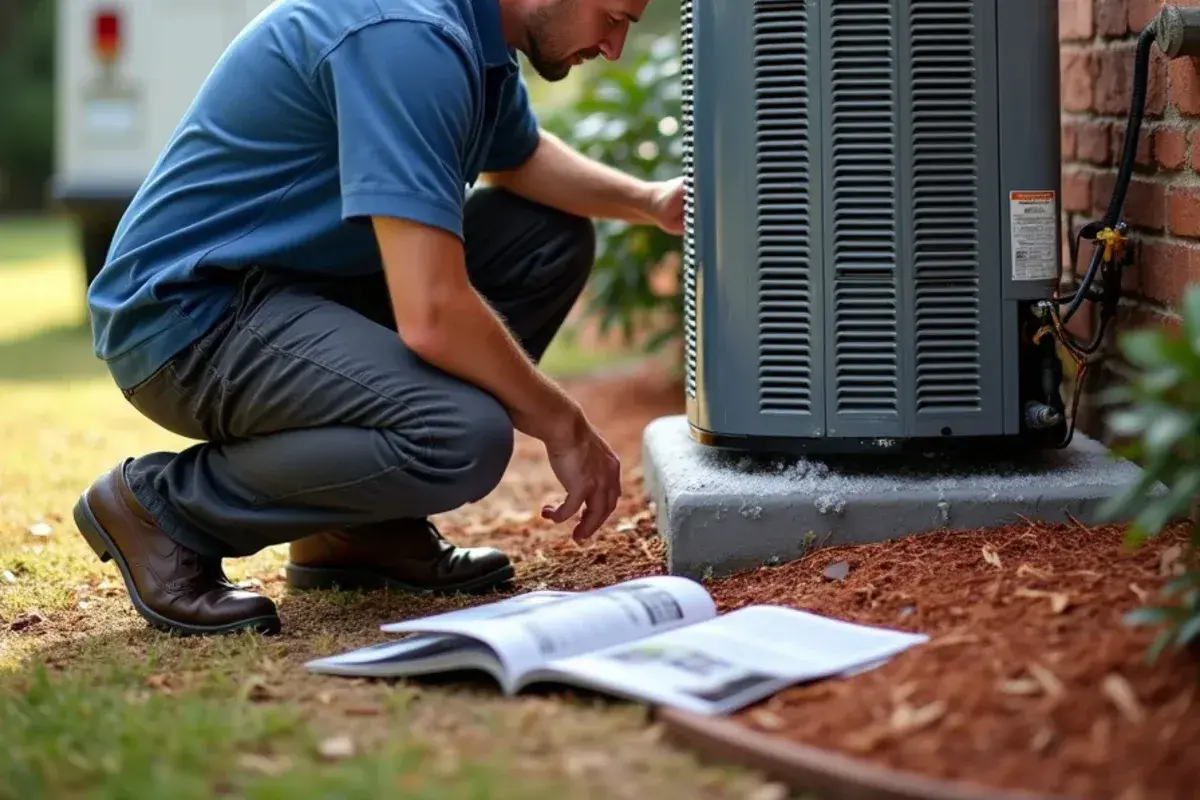
With the thermostat calling for cooling, stand near the condenser. You should hear the compressor and see the top fan spinning. Pull back any grass clippings, leaves or vines blocking the coil fins. Don't open panels or poke anything through the grille.
What the outdoor unit is telling you
The condenser is the box outside that dumps heat from your house. How it sounds and looks narrows the cause quickly. Use this table to match what you notice with the likely problem and how urgent it is.
| Sign | Probable cause | Your move |
|---|---|---|
| Indoor fan runs, outdoor unit silent | Tripped breaker, pulled disconnect, failed contactor or low-voltage wiring | Reset breaker once; call if it stays silent |
| Outdoor unit hums, top fan not spinning | Failed run capacitor or condenser fan motor | Turn system off now and call |
| Everything runs, air is only slightly cool | Dirty coil, low refrigerant or a weak compressor | Replace filter; schedule service |
| Ice on the copper lines or indoor coil | Restricted airflow or low refrigerant | Turn cooling off, run fan only to thaw, then call |
| Breaker trips again within minutes | Electrical short or compressor pulling too much current | Leave it off and call |
| Water pooling near the indoor unit | Clogged condensate drain tripping a safety switch | Shut off cooling, dry the area, call |
A humming condenser with a still fan is the classic failed-capacitor sound. The capacitor is a small cylinder that gives the motors a kick to start, and it's one of the most common summer failures here because heat wears it down. It also stores a charge after the power is off, which is why it stays on the technician's side of the line.
Things to leave alone
Some well-meant fixes cause more damage than the original fault.
- Don't add refrigerant from a store-bought kit. Federal EPA Section 608 rules govern who can handle refrigerant, and a system low on charge has a leak that needs finding first.
- Don't hose ice off the coil or chip at it. Let it thaw with the fan running and cooling off.
- Don't keep resetting a breaker. One reset is a test; three is a risk.
- Don't remove electrical panels on the condenser. Even with the breaker off, the capacitor can bite.
Is it an emergency or can it wait?
A warm house is uncomfortable; a dangerous house is different. Treat it as urgent when someone in the home is an infant, elderly, pregnant or managing a health condition that heat makes worse, or when indoor temperatures are climbing past what you can manage with fans and shade. Burning smells, a breaker that won't hold, or water running into a ceiling also justify a call at night.
For those situations, our emergency AC repair line is answered 24/7. If everyone is healthy, the house is holding in the low 80s and nothing smells or leaks, a next-morning appointment for standard AC repair in Lexington is usually the better value, and plenty of days there's a same-day opening.
Heat stroke outranks any equipment problem. A person who turns confused, flushed and hot to the touch, or who faints, needs 911 first.
Why Lexington-area systems quit in July
Long cooling seasons put a lot of run hours on a system. In our hot-humid climate, the AC is removing moisture as well as heat, so it runs longer cycles than it would in a dry climate, and parts that wear with heat and time, such as capacitors, contactors and fan motors, fail during the hottest stretch.
Neighborhood age plays a part too. Many subdivisions in Red Bank date from the 13 SEER era, and their original condensers have reached the age where repairs start stacking up. Along the US-1 corridor in Oak Grove, slab ranches from the 1980s and 90s often run on duct systems that are decades old, which can make a weak system feel even weaker. Across Lexington County, attic air handlers in two-story homes add another failure point: clogged condensate drains that shut the system off to prevent a ceiling leak.
What we test once the easy checks come up empty
On a no-cool call, the first stretch of the visit is measurements, not parts. We read the air temperature at a return grille and at a supply register to see how much heat the indoor coil is really removing, then check the voltage reaching the condenser and the low-voltage call coming from the thermostat. Those readings sort the problem into power, controls, airflow or refrigerant before anything gets unbolted.
The capacitor is tested with a meter against the microfarad rating printed on its label, because one can look perfectly normal and still read weak. The contactor, the relay that switches the condenser on, gets checked for pitted or stuck contacts. If those pass, gauges or digital probes go on the service valves, and the pressures and line temperatures are compared with the manufacturer's charging chart rather than a rule of thumb.
Two honest trade-offs come up on these calls more than any others:
- A small part on an aging system. Replacing a failed capacitor brings most units back on the same visit, and it is usually the right repair. It does not make a worn compressor younger, so you also hear what else showed up while the panel was off.
- Low charge means a leak somewhere. Adding refrigerant without finding where it went buys weeks, sometimes one season. Systems built for R-22 run on reclaimed supply only, since US production ended in 2020, so a leak in one of those often shifts the talk toward replacement. Proper AC coil and refrigerant leak repair starts by pinpointing the leak with an electronic detector or bubble solution.
Systems installed from 2025 onward use A2L refrigerants such as R-454B, which ASHRAE Standard 34 classes as mildly flammable and which come with their own handling procedures. That is one more reason refrigerant work stays off the homeowner list.
What to have ready when you call
A few details help the technician arrive with the right parts and shorten the visit.
- What you checked: thermostat, breaker, filter.
- What the outdoor unit is doing: silent, humming, running with warm air.
- Any sounds or smells and when they started.
- The approximate age of the system, if you know it. A sticker on the condenser often shows the manufacture date.
- Whether anyone in the home is vulnerable to heat.
While you wait, close blinds on the sunny side of the house, keep exterior doors shut, avoid the oven and dryer, and set ceiling fans to blow downward.
Putting it together
Start with the thermostat, the breakers, the filter and a look outside. If one of those was the problem, you're done. If the condenser hums without spinning, the lines are icing, or the breaker trips a second time, turn the system off and let a technician test it. That one decision, stopping a struggling system instead of letting it run, protects the compressor, which is the most expensive part in the box.
When you've done your part and the house is still warming, call (213) 423-7827. Tell us what the thermostat, breaker, filter and outdoor unit showed, and whether anyone at home is vulnerable to heat, and we'll tell you honestly whether it should be tonight or first thing tomorrow.